

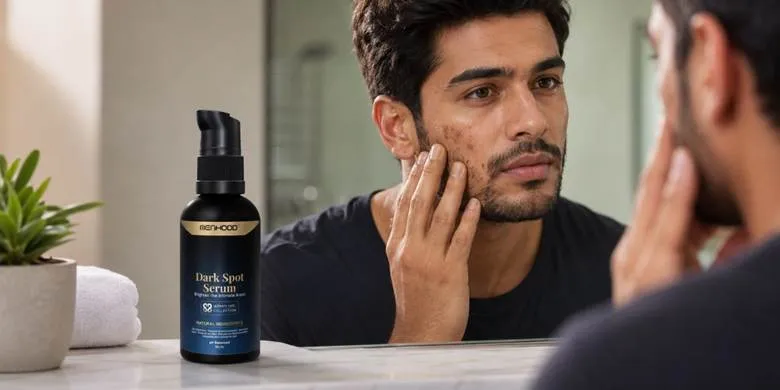
Men can remove dark spots on the face without damaging the skin by using proven skincare ingredients, protecting the skin from sun exposure, avoiding harsh treatments, and following a consistent skincare routine. The key is to fade pigmentation gradually rather than trying to remove it aggressively. Many men make the mistake of scrubbing, picking, or overusing strong products, which often causes more irritation and can make dark spots look worse.
For men dealing with dark spots on face, the right skincare routine matters more than harsh scrubbing or quick home remedies. A good dark spot serum or face serum for men can support gradual improvement when used consistently with moisturiser and sunscreen. The goal is not to bleach the skin, but to improve uneven tone safely over time.
What Are Dark Spots?
Dark spots, also known as hyperpigmentation, occur when certain areas of the skin produce more melanin than the surrounding skin.
Melanin is the pigment responsible for the colour of your skin, hair, and eyes. When the skin experiences inflammation, injury, or excessive sun exposure, it may produce extra melanin during the healing process. This creates patches or spots that appear darker than the rest of the skin.
Dark spots can vary in size and colour, ranging from light brown marks to deeper pigmentation.
Common Causes of Dark Spots in Men
Before treating dark spots, it helps to understand what caused them in the first place.
1. Acne Marks
Acne is one of the leading causes of facial pigmentation in men. Even after a pimple heals, the inflammation it creates can leave behind a dark mark.
This is especially common when men:
● Pick or squeeze pimples before they heal
● Experience frequent breakouts
● Have naturally deeper skin tones
Why acne marks last so long:
● The skin produces extra melanin while healing.
● Larger or inflamed pimples create deeper pigmentation.
● Repeated breakouts can leave multiple spots across the face.
These marks are not true scars, but they can take weeks or even months to fade.
2. Sun Exposure
Many men underestimate the impact of daily sun exposure on their skin.
When UV rays hit the skin, the body responds by producing more melanin to protect itself. Over time, this can lead to visible pigmentation and uneven skin tone.
Common effects of sun exposure include:
● Sun spots: Small brown spots that often appear on the cheeks, forehead, and nose.
● Uneven skin tone: Certain areas become darker than others.
● Persistent dark patches: Existing pigmentation can become darker and more noticeable.
● Premature ageing: UV exposure also contributes to fine lines, rough texture, and dull-looking skin.
Even short periods outdoors without protection can gradually worsen pigmentation.
3. Shaving Irritation
Shaving is part of many men’s daily routines, but improper shaving techniques can irritate the skin.
Repeated friction from razors may trigger inflammation, especially around the neck, jawline, and cheeks.
Shaving-related pigmentation may develop due to:
● Razor burns
● Ingrown hairs
● Dry shaving
● Using dull blades
● Applying excessive pressure while shaving
When the skin repeatedly becomes irritated, dark marks may develop over time.
4. Skin Injuries and Irritation
The skin often produces extra pigment after any type of injury.
Examples include:
● Small cuts
● Scratches
● Insect bites
● Burns
● Allergic reactions
This process is known as post-inflammatory hyperpigmentation and is particularly common in medium to deeper skin tones.
Why Harsh Treatments Can Damage the Skin
Many men become impatient when dealing with dark spots and try multiple treatments at once.
Unfortunately, this often causes more harm than good.
Common mistakes include:
● Scrubbing the skin aggressively
● Using strong exfoliants daily
● Applying too many active ingredients together
● Picking at acne or dark spots
● Trying unverified home remedies
What Happens When You Over-Treat the Skin?
Excessive treatment can:
● Damage the skin barrier
● Increase redness
● Trigger irritation
● Cause dryness and peeling
● Lead to additional pigmentation
The skin heals best when it is supported, not attacked.
Ingredients That Help Fade Dark Spots Safely
The safest way to improve pigmentation is by using ingredients that target uneven skin tone while respecting the skin barrier. This is why many men prefer using a dark spot correcting glow serum or a targeted dark spot serum instead of trying harsh scrubs or random home remedies.
Niacinamide
Niacinamide is one of the most versatile skincare ingredients available today.
It helps improve skin tone while supporting overall skin health.
Benefits of Niacinamide
● Helps reduce the appearance of dark spots: It works gradually to improve uneven pigmentation.
● Strengthens the skin barrier: A healthy barrier protects the skin from irritation and moisture loss.
● Balances excess oil production: Particularly beneficial for men with oily skin.
● Improves skin texture: Skin often appears smoother and healthier with regular use.
Because it is generally well tolerated, niacinamide is suitable for most skin types.
Tranexamic Acid (TXA)
Tranexamic acid has become increasingly popular in products designed for pigmentation concerns.
It is often used to target stubborn dark spots and uneven skin tone.
Benefits of Tranexamic Acid
● Supports a more even-looking complexion: Helps address visible pigmentation.
● Targets post-acne marks: Commonly used for dark spots left behind after breakouts.
● Works well alongside other brightening ingredients: Often combined with niacinamide and alpha arbutin.
● Suitable for long-term use: Many people incorporate it into their daily skincare routine.
Alpha Arbutin
Alpha arbutin is another ingredient frequently found in pigmentation-focused skincare products.
Benefits of Alpha Arbutin
● Helps improve uneven skin tone: Supports a brighter and more uniform complexion.
● Targets visible dark spots: Commonly used in dark spot serums and creams.
● Gentler than some stronger brightening ingredients: Suitable for many skin types.
● Can be used consistently: Often included in both morning and evening routines.
Kojic Acid
Kojic acid is widely used in skincare products designed to address pigmentation concerns.
Benefits of Kojic Acid
● Supports skin brightness: Helps improve the appearance of dull skin.
● Targets pigmentation concerns: Frequently used for dark spots and uneven tone.
● Works alongside other brightening ingredients: Often included in combination formulas.
● Suitable for gradual improvement: Consistency is important for visible results.
How to Choose the Best Serum for Dark Spots
The best serum for dark spots is not always the strongest one. It should contain skin-friendly brightening ingredients, suit your skin type, and work without causing burning, peeling, or irritation.
When choosing a face serum for men, look for ingredients such as:
● Niacinamide
● Tranexamic acid
● Alpha arbutin
● Kojic acid
● Hydrating ingredients
A dark spot correcting glow serum can be helpful if it is designed to target pigmentation while also supporting skin brightness and hydration. Men with oily, acne-prone, or shaving-sensitive skin should start slowly and check how their skin responds.
Why Hydration Is Essential When Treating Dark Spots
Many men focus entirely on pigmentation and overlook the importance of hydration.
Healthy skin repairs itself more effectively when it remains moisturised.
How Hydration Supports Recovery
● Maintains a healthy skin barrier: This reduces sensitivity and irritation.
● Improves tolerance to active ingredients: Hydrated skin is less likely to become irritated.
● Supports natural skin renewal: The skin can repair itself more efficiently.
● Reduces dryness and flaking: Common side effects of some active ingredients.
Think of hydration as creating the ideal environment for skin recovery.
Why Sunscreen Is the Most Important Step
You can use the best dark spot treatment in the world, but without sunscreen, progress may be slow.
How Sun Exposure Affects Dark Spots
Every time pigmented skin is exposed to UV rays:
● Melanin production increases
● Existing spots can become darker
● Recovery slows down
● New pigmentation may develop
This is why dermatologists often consider sunscreen the foundation of any pigmentation routine.
Benefits of Daily Sunscreen Use
● Prevents dark spots from becoming darker: UV protection helps maintain progress.
● Reduces the risk of new pigmentation: Helps prevent future spots from developing.
● Supports skincare results: Allows brightening ingredients to work more effectively.
● Protects overall skin health: Reduces long-term sun damage.
Even on cloudy days, sunscreen remains important.
Habits That Slow Down Dark Spot Recovery
Picking Pimples
Picking acne increases inflammation and significantly raises the risk of post-acne pigmentation.
Over-Exfoliating
Many men believe more exfoliation equals faster results.
In reality, excessive exfoliation can:
● Damage the skin barrier
● Cause irritation
● Trigger additional pigmentation
Using Too Many Products
A complicated routine is not always better.
Using multiple strong products together can overwhelm the skin.
Skipping Moisturiser
Dry skin often becomes irritated more easily and may take longer to recover.
A Simple Daily Routine for Men With Dark Spots
Morning Routine
Gentle Cleanser
Start with a cleanser that removes oil and dirt without stripping the skin.
Dark Spot Serum
Apply a dark spot serum containing ingredients such as niacinamide, tranexamic acid, alpha arbutin, or kojic acid. A lightweight face serum for men can be useful for daily use, especially if you are dealing with acne marks, shaving marks, or uneven tone.
Moisturiser
Hydrates the skin and supports the skin barrier.
Sunscreen
Protects against UV exposure and prevents dark spots from becoming darker.
Evening Routine
Cleanser
Remove sweat, pollution, and excess oil accumulated throughout the day.
Dark Spot Treatment
Apply your chosen pigmentation-focused product.
Moisturiser
Supports overnight recovery and hydration.
How Long Does It Take to See Results?
One of the most common questions men ask is how quickly dark spots will disappear.
The answer depends on:
● The cause of the pigmentation
● Your skin type
● The depth of the dark spot
● Sun protection habits
● Consistency of your routine
Typical Timelines
|
Type of Pigmentation |
Improvement Timeline |
|
Mild post-acne marks |
4 to 8 weeks |
|
Moderate dark spots |
2 to 4 months |
|
Stubborn pigmentation |
Several months or longer |
Gradual improvement is normal and often indicates that the skin is healing safely.
Final Thoughts
Men can reduce dark spots on face without damaging the skin by choosing gentle, evidence-based skincare and avoiding aggressive treatments. Dark spots often develop due to acne, sun exposure, shaving irritation, or skin inflammation, but they can improve when the skin is protected and supported properly.
A routine built around ingredients such as niacinamide, tranexamic acid, alpha arbutin, and kojic acid, combined with daily sunscreen and proper hydration, can help create a clearer and more even-looking complexion over time. Using a suitable dark spot serum or dark spot correcting glow serum can also support the process, as long as it is used consistently and not treated like an overnight fix.
The goal should always be steady, healthy improvement rather than quick results that may damage the skin barrier.
FAQs
Can dark spots disappear naturally?
Yes. Some dark spots fade on their own over time, but targeted skincare and sun protection can often speed up improvement.
What is the best ingredient for dark spots?
There is no single best ingredient. Niacinamide, tranexamic acid, alpha arbutin, and kojic acid are commonly used to target pigmentation.
Does shaving cause dark spots?
It can. Repeated irritation, razor burns, and ingrown hairs may contribute to pigmentation in some men.
How long does it take for dark spots to fade?
Mild dark spots may improve within a few weeks, while deeper pigmentation can take several months.
Can scrubbing remove dark spots faster?
No. Aggressive scrubbing often irritates the skin and may worsen pigmentation rather than improve it.